
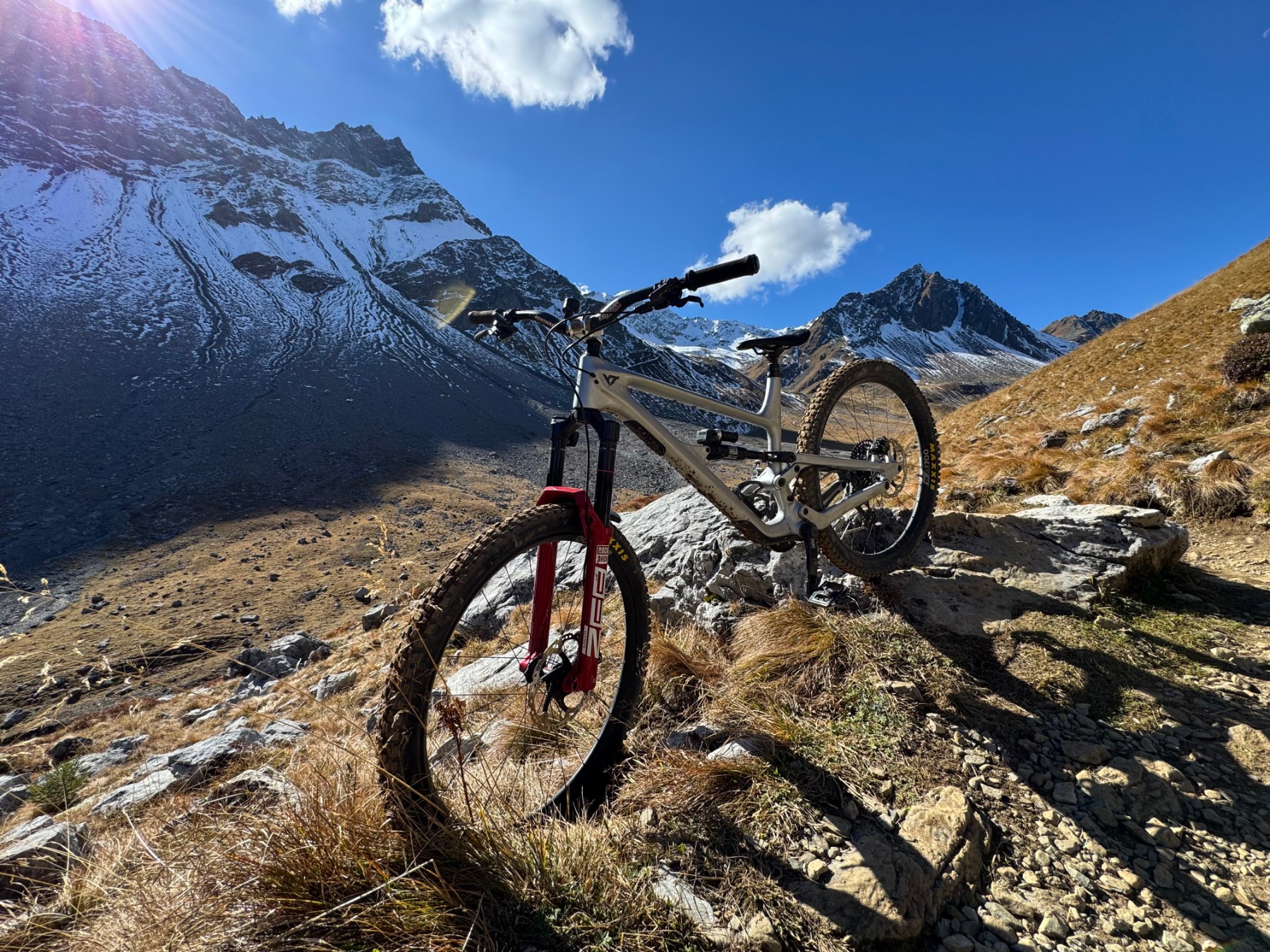
The question I keep getting on the trail is whether Flight Attendant is worth it. After about a year riding it on my YT Capra, the thing I would miss most is the support on tricky pinch climbs. There are sections where it has been the difference between clearing the climb and putting a foot down.
That was what I hoped it would help with. I bought the system second-hand out of curiosity and because a good deal came up. I wanted my local fitness laps and climbs back to the top to be more enjoyable. Remembering to charge another couple of batteries seemed a reasonable trade if it delivered that.
I paid for it myself. There has been no brand support, and there are no affiliate links in this review.
The same Capra, before and after
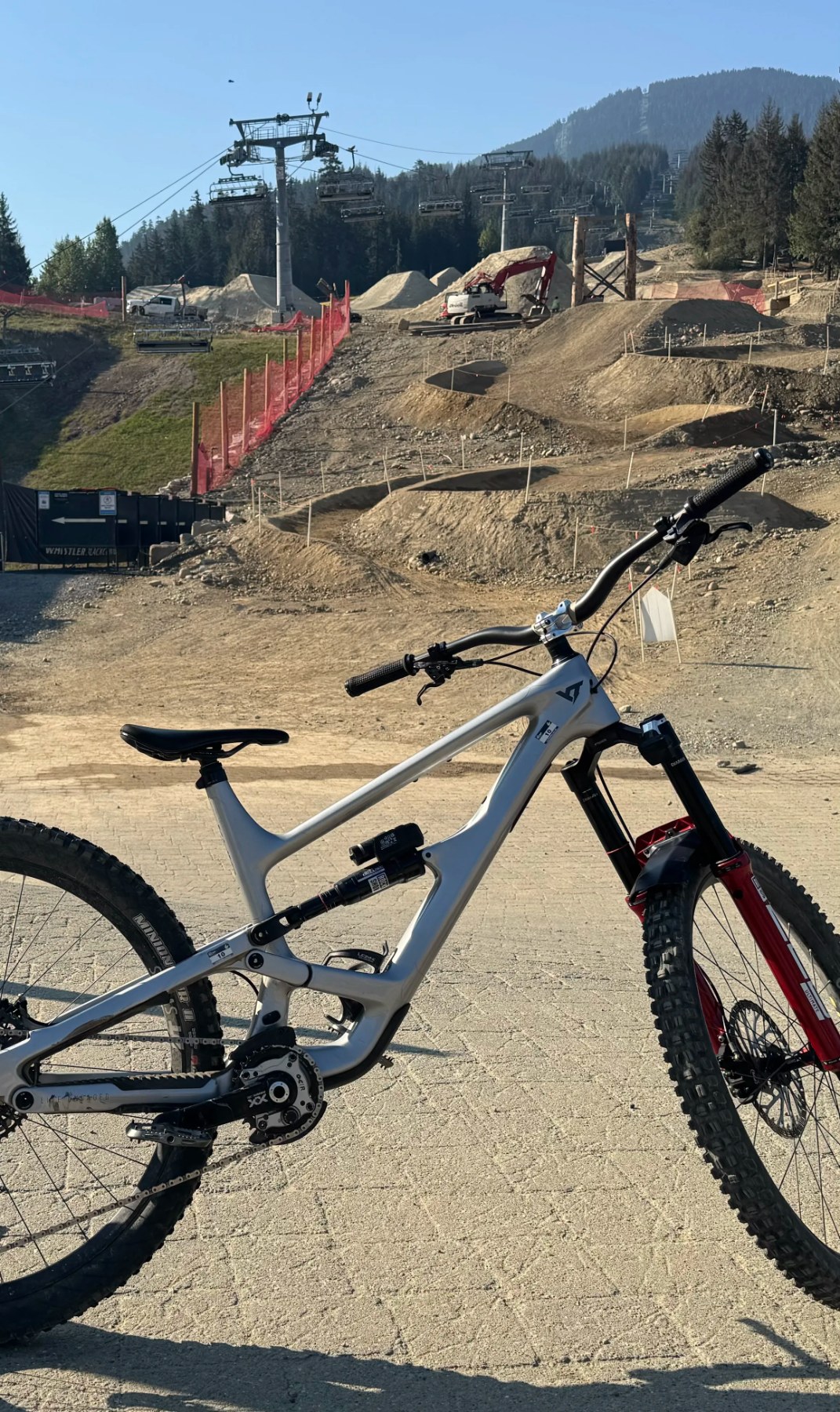
My bike is a 2024 YT Capra. I rode its standard RockShox setup for about six months before fitting a Zeb Ultimate Flight Attendant fork, Super Deluxe Ultimate Flight Attendant shock and the crank-mounted Flight Attendant pedal sensor. It was a like-for-like suspension swap, with the automation being the change I was interested in.
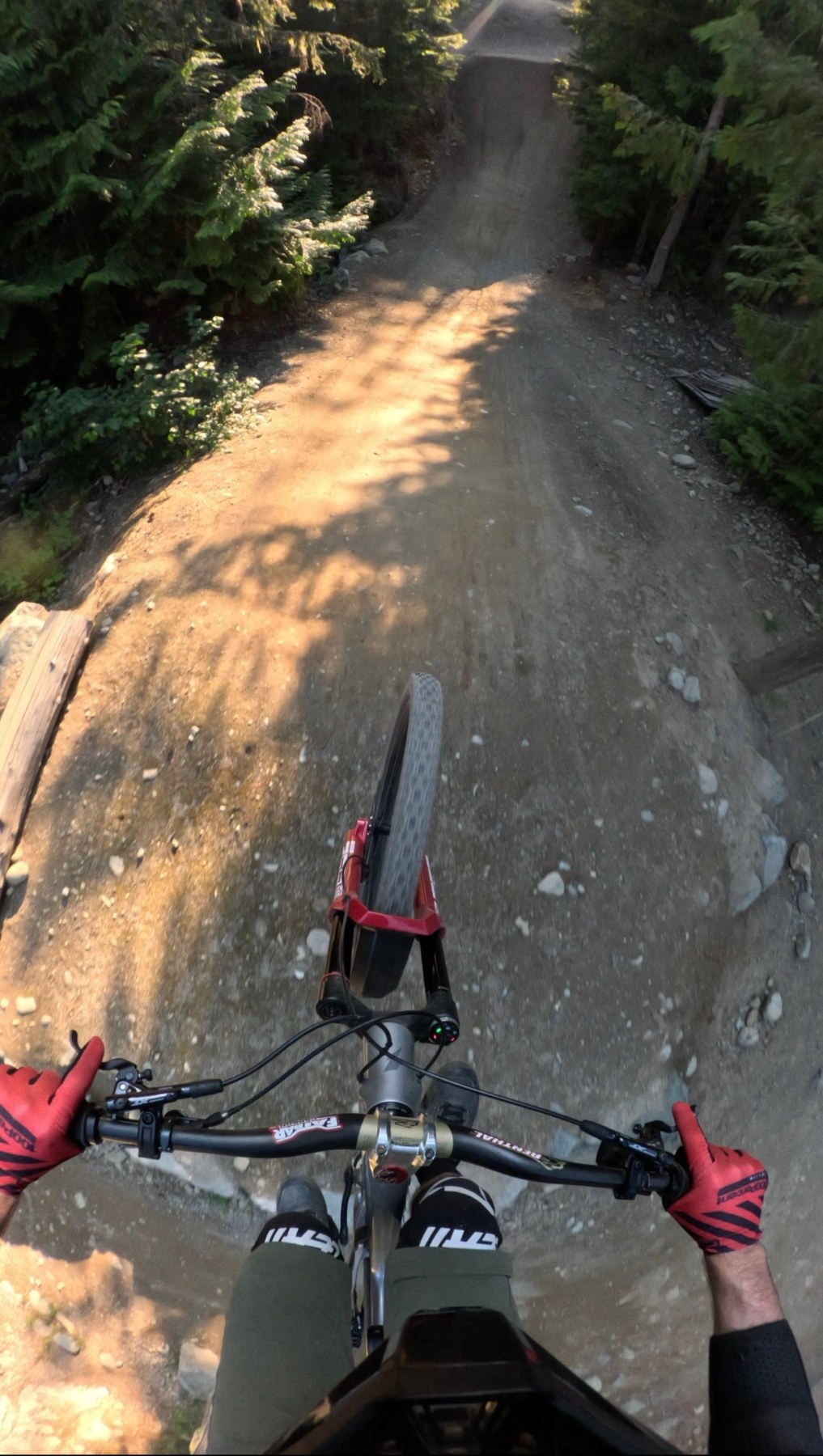
Since then, it has done local fitness loops, downhill laps with fire-road climbs, shuttle days, European lift-access bike parks and backcountry trails in the Alps. At Whistler, I have ridden everything from A-Line and Dirt Merchant to double-black tech and Top of the World on it.
This is an ownership review based on those rides. I haven't measured a percentage improvement in efficiency or run timed, controlled comparisons.
For anyone unfamiliar with the system, Flight Attendant automatically switches the suspension between Open, Pedal and Lock compression positions. Rebound remains a manual adjustment; it isn't automatically changing every aspect of the suspension tune. RockShox's explanation.
One buying detail matters: my rear shock needs the Flight Attendant fork for its automatic operation. Buying the shock alone won't give you an automatic rear suspension setup. RockShox currently says there is no rear-shock-only option. It does offer fork-only operation for supported setups, which is a different proposition.
Technical climbs are where I would miss it
The first ride started with a big paved hill, and I was impressed by how quickly and easily it all just worked. I would usually reach down and lock out the fork before a big climb; Flight Attendant took care of it straight away, and that first climb did exactly what I'd hoped it would.
The more useful discovery came on short, technical climbs in the bush. These are the places where I wouldn't normally reach down to flick a lever. With Flight Attendant, the support was there when I needed to get power down. I started attempting harder climbs straight away and making them.
I've since ridden the same climbs with a flat Flight Attendant battery and failed to clear them without a dab. Conditions, fatigue and line choice can all affect a climb, so I can't put that entirely down to the suspension. But it matches what I've repeatedly felt with the system working: the bike supports my effort better at those awkward moments.
My comparison is with how I actually rode this bike before—usually leaving the suspension open. I haven't established that Flight Attendant beats a rider who uses a manual or remote lockout properly every time. For me, getting that support without having to think about the lever is a large part of its value.
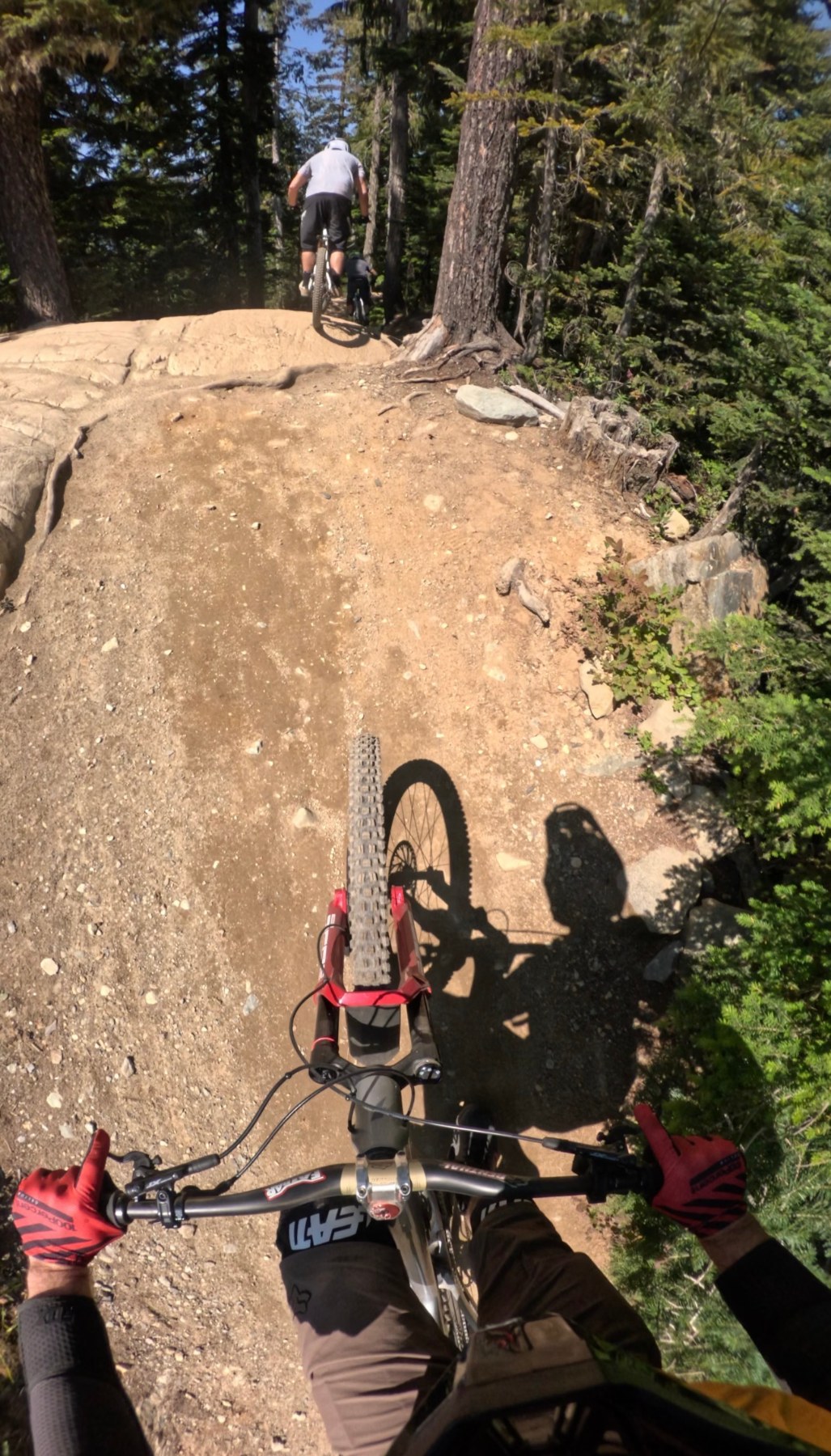
A short climb you wouldn't normally be able to lock out your suspension for is where the Rockshox Flight Attendant comes in most handy!
Jumps, descending and bike park days
The first time I had to put in a hard pedal towards a big, fast jump, I noticed the same support. Getting power down felt easier, which helped my confidence approaching the gap. The landing still felt soft.
Generally, it feels as though the suspension stays firm through the lip and softens in the air. That's my impression—I haven't checked the actual switching point. If I stop pedalling well before the lip, I feel it soften earlier.
It hasn't felt unpredictable to me. I've had no unexpected bucking or takeoff problems, from large gaps through little poppy rollers to hopping rocks and roots. I run the bias one click towards Open because it seems quicker to soften on flatter downhill sections. Bias adjustment changes the system's preference towards a firmer or softer position; that setting suits my riding.
Occasional pedal-ins to jumps are the only downhill benefit I would credit to Flight Attendant. On a lift or shuttle day, there are also the less exciting bits: pedalling between trails, back to the car or to your accommodation. It's handy there too.
I wouldn't buy it just for those moments. They are useful extras on a bike that also gets ridden uphill.
Battery life: ten Whistler days without charging
I did ten full riding days at Whistler without charging the Flight Attendant batteries. That's ten days of park riding, not ten uninterrupted days with the system constantly changing positions, and it isn't a test of how long they take to go flat.
I get fewer rides between charges on local fitness loops, where it seems to switch more often. I haven't kept a precise count. In my use, a single big ride hasn't been a battery-life problem; remembering to charge between rides is the inconvenience.
For reference, RockShox publishes estimates of 20–30 hours for the fork battery, 30–40 hours for the shock battery and 200 hours for the lithium-AAA pedal sensor battery. Those are manufacturer estimates, but it does sound about right from my riding-day experience. Official battery specifications.
When an AXS suspension battery reaches low power, Safe Mode puts the suspension into Open. Losing the automatic support is annoying, particularly on those climbs, but continuing the ride with open suspension hasn't been a big problem for me.
Reliability and other owners' experiences
I've had no faults over the year, and nothing has needed attention beyond normal RockShox maintenance.
Other owners haven't all had the same experience. A second-hand Capra owner on Reddit reported initially enjoying the climbing performance, then a fork module that became difficult to start and eventually stopped responding. A separate Lyrik owner reported a damper error that they cleared through a firmware recovery procedure.
Is RockShox Flight Attendant worth it?
If it turns a $3,000 bike purchase into a $5,000 one, I wouldn't consider it worth the extra money. If you're already comfortably spending $15,000 on a bike, the same upgrade is a different prospect. Those are examples of the spending decision, rather than current prices for a particular kit.
I bought second-hand, which helped make trying it an easier decision. That doesn't mean everyone should pay new prices for the experience I've described.
If you can comfortably afford it, I think it adds value. How much depends on your riding. It has earned its place for me on the fitness loops, fire-road returns and tricky climbs where I otherwise wouldn't bother touching a lockout. The park-day conveniences alone wouldn't justify buying it.
If I took it off tomorrow, I would miss the support and power delivery on pinch climbs. Going a full lap without putting a foot down matters to me. Whether that is worth the cost to you depends on what you would have to give up to get it.
Written and photographed by Tom Ford for Boosted Media
Back to Boosted MTB